

EASTER ISLAND INFO
Rapa Nui is an isolated volcanic island located in the heart of the South Pacific, halfway between Tahiti and South America. Its first inhabitants were Polynesians who settled the island in about 1000 AD, and whose belief systems led to the carving of the stone statues for which Easter Island is now so famous.
Subsequent over-population, and over-exploitation of the island’s limited resources from the 16th century onwards led to the island’s deforestation, widespread inter-tribal warfare and ultimately to the so-called ‘collapse’ of the original culture. Having been up as high as perhaps 12,000 people during the peak of the statue-carving period, in 1877 the island’s population numbered just 111 people. Crucially, neither the language nor the oral history disappeared, and together with the numerous archaeological studies that have been carried out since, much is now understood about the history and original culture of Easter Island.
The island was first discovered by the outside world in 1722, on Easter Sunday (hence the island’s name), when Dutch explorer Jacob Roggeveen chanced upon it during his search for the Great Southern Continent. Understandably, tales of this exotic island with over 1,000 megalithic statues soon spread, and many other explorers, including James Cook in 1774, came to marvel at Easter Island. In 1888, Chile took possession of the island, and Easter Island has been part of Chile ever since.
The opening of the airport in 1967, aside from becoming an emergency landing site for NASA’s space shuttle programme, has meant that this once-inaccessible island is now finally within reach of all modern-day travellers, and yet fortunately has still maintained a genuinely off-the-beaten-track feel.
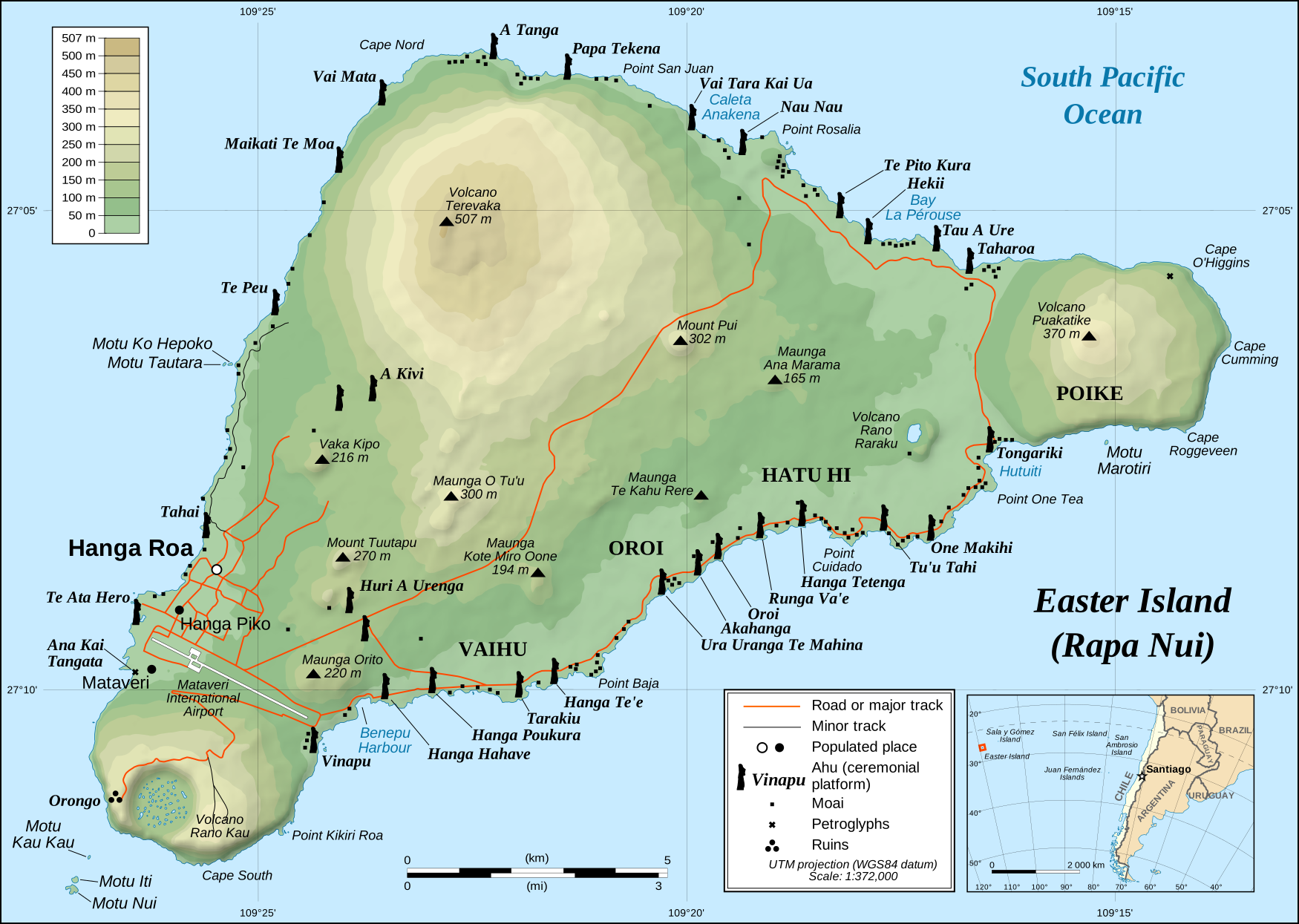
click to enlarge.
NATIONAL PARK ENTRANCE FEE
The entrance fee to the Rapa Nui National Park is U$ 80 pesos for all non-Chilean visitors. While it is possible to pay for your entrance ticket on the island, it is much easier to buy it online beforehand here.
Easter Island enjoys a sub-tropical climate, and is therefore a year-round destination. Temperatures in summer (Dec – Mar) rarely exceed 30°C (86°F), while in winter they never drop below 15°C (60°F). The island receives 45 inches of rain per year (compared to Tahiti’s annual rainfall of about 80 inches), and it can rain throughout the year, although the wetter season tends to be from May until September.
The island population is currently about 8,000 people, about 50% of whom are Rapa Nui, i.e. of Polynesian descent, while the remainder are from mainland Chile, together with a handful of foreigners.
The official language of Easter Island is Spanish, but most of the Rapanui speak Rapa Nui, a Polynesian language closely related to Tahitian. Basic English is spoken by most people working in the tourist industry.
Easter Island uses a dual currency of both Chilean Pesos and US Dollars, avoiding the need to change any dollars that you bring with you. Some shops and restaurants will also accept Euros, and credit cards are increasingly accepted in shops and restaurants. As you’d expect for such an isolated place, Easter Island is not cheap, either for visitors or locals. Much of this is due to nearly all goods (including even cars) being flown in by plane from Santiago. But fear not, once you’ve paid your National Park entrance fee (see above), Easter Island’s riches are all entirely free for you to discover.
Easter Island is kept 2 hours behind mainland Chile, and observes Daylight Saving Time. If you look at a map, the island really should be 3 or 4 hours behind the mainland, but is maintained nearer to Santiago in order to facilitate the banks and government offices. As a result, sunrise and sunset here are relatively late.
Voltage throughout Chile is 220V, and plugs are two round pins. Hanga Roa has electricity 24 hours a day, although occasional blackouts do still occur. Electricity is generated by a series of diesel generators, although it is hoped that more sustainable alternatives will soon be implemented, particularly given the abundance of sun, wind and waves here.
Rapa Nui is a small community where any form of violent crime is fortunately almost non-existent. You should, however, look after your personal belongings as you would anywhere else in the world.